





“Don’t ever go to bed angry.”
An advice as old as marriage itself. In Thrity Umrigar’s new novel, Missing Sam, it becomes a fault line. The novel opens with Samantha O’Malley and Aliya Mirza doing exactly what they shouldn’t: going to bed furious. The next day, Sam goes for a run alone and doesn’t come back.
That is the hook. But Umrigar is far more interested in the marriage itself than in the disappearance. What matters to her are the generational and deeply personal forces that made that night’s fight inevitable, and the long work of living with the consequences.
Not like the other
Sam, a white Irish-American poet and academic, and Ali, a Brown, Muslim, Indian-American interior designer, have been together for eight years. Their marriage is a good one, albeit complicated by the baggage each drags in from their respective childhoods. Sam’s father was violent, a man who taught his daughter that public humiliation was unforgivable. Meanwhile, Ali’s father policed his daughter’s life in the name of faith, leaving her with an unquenchable appetite for freedom. When Sam watches Ali laugh a little too freely with a friend, two family histories collide. Ali reflects, the morning after, that “Sam and I are both doomed to keep acting out our childhood shit until one of us gets tired of it.” It lands as the grief of people who can see their pattern clearly and feel almost powerless against it.
The novel alternates between Sam’s and Ali’s perspectives, with a significant section dedicated to the man who abducts Sam. But it is Ali who gives the novel its life, and the way she handles Sam’s disappearance is where Umrigar’s writing shines.
As the days lengthen and Sam doesn’t return, Ali begins to understand how quickly identity can harden into accusation. Brown. Muslim. Queer. They become a liability in different hands. Clients begin to withdraw. Strangers weaponise her religion and ethnicity. The internet decides she is the culprit. She has spent years constructing distinctions between herself and other marginalised people; she came here legally, she went to good schools, she has a white American wife, she lives in a city so liberal it is jokingly called the People’s Republic of Cleveland Heights.
Sam’s disappearance strips those distinctions away one by one. “Maybe,” she thinks, “my entire life has been, if not a lie, then a misunderstanding.” She seeks out a mosque in search of something she cannot name, uneasy with her own desire for belonging. There is no sudden, forced reconciliation with Islam in the story; she interrogates her longing, resists it, then partially yields through her father’s gift of a religious text. The realisation comes not inside the mosque but in the car park outside. Her faith, it turns out, is not Islam. It is Sam.
Ali’s father, Irfan Mirza, gives the novel a genuine glow of warmth. A man who once made Ali choose between her queerness and his love, now, in the wreckage of Sam’s disappearance, quietly closes the distance with his steadfast presence.
The aftermath of the rescue
The thrill in Missing Sam’s is its weakest element. The man who has taken Sam, Greg Anderson, is a repository of social evil: an Afghanistan veteran with a dishonourable discharge in addition to being misogynistic, racist, and homophobic – a man who believes the world owes him a docile woman. The problem is not plausibility. Such men exist. The problem is that Umrigar has assembled him so thoroughly from recognisable parts that he generates very little dread. Horror requires unpredictability. Every turn of his thinking here is so predictable that he ends up becoming a caricature, and the novel pays for it.
Where Greg’s anger is rendered as pure pathology, Sam’s is seeded early in the rage she holds against her father. It runs beneath everything, and when it finally surfaces, it becomes the instrument of her survival.
Most thrillers end with the rescue. Missing Sam insists on the aftermath. Sam is restrained, almost eerily composed in moments. She describes her mind as “a filing cabinet of trauma and pain, and every night, a drawer slides open and memories slither out.” She has understood something about survivorship: that some of what was done to her, she will carry alone because it is the only way she can keep it from becoming Ali’s wound too. While visiting her parents – her father now softened by Alzheimer’s, her mother still choosing to stay – Sam wonders whether growing up watching her mother absorb her father’s rage had somehow primed her for captivity. “I can’t shake that feeling of cowardice,” she thinks, and it’s crushing because we know she is wrong, and she cannot yet know it herself.
Meanwhile, Ali is grateful that Sam is back, but she feels lonely. Sam says they are “appeasing one another.” The novel holds both women’s interiors simultaneously in these chapters, and what we see is the gap between what they show each other and what they actually feel. These are two people trying very hard not to fracture what they nearly lost.
Umrigar’s prose throughout is clear and emotionally direct. It is also, at times, a little too willing to do the reader’s work for them. Inner monologues sometimes become explanations; epiphanies are flattened. This dilutes the very complexity the novel has worked to build.
The novel closes in March 2020, with Ali stranded in an Indian airport, flights cancelled, crowds surging, something unnameable pressing at the edges of things. Umrigar stops at the threshold of the COVID-19 pandemic outbreak. Ali senses “something big and portentous” coming. The choice is shrewd: one more catastrophe would have swamped the story. Instead, the novel ends in a mood of hard-won hope. You want to believe in Sam and Ali. But it is too sanitised for a novel that has spent most of its energy in the difficult, unresolved space between knowing and changing, surviving and healing. The ambivalence that made the early sections crackle has been tidied into Sam’s final meditation on forgiveness. It ends by insisting that, despite everything, love is still the answer. It is a choice, but not the novel at its strongest.
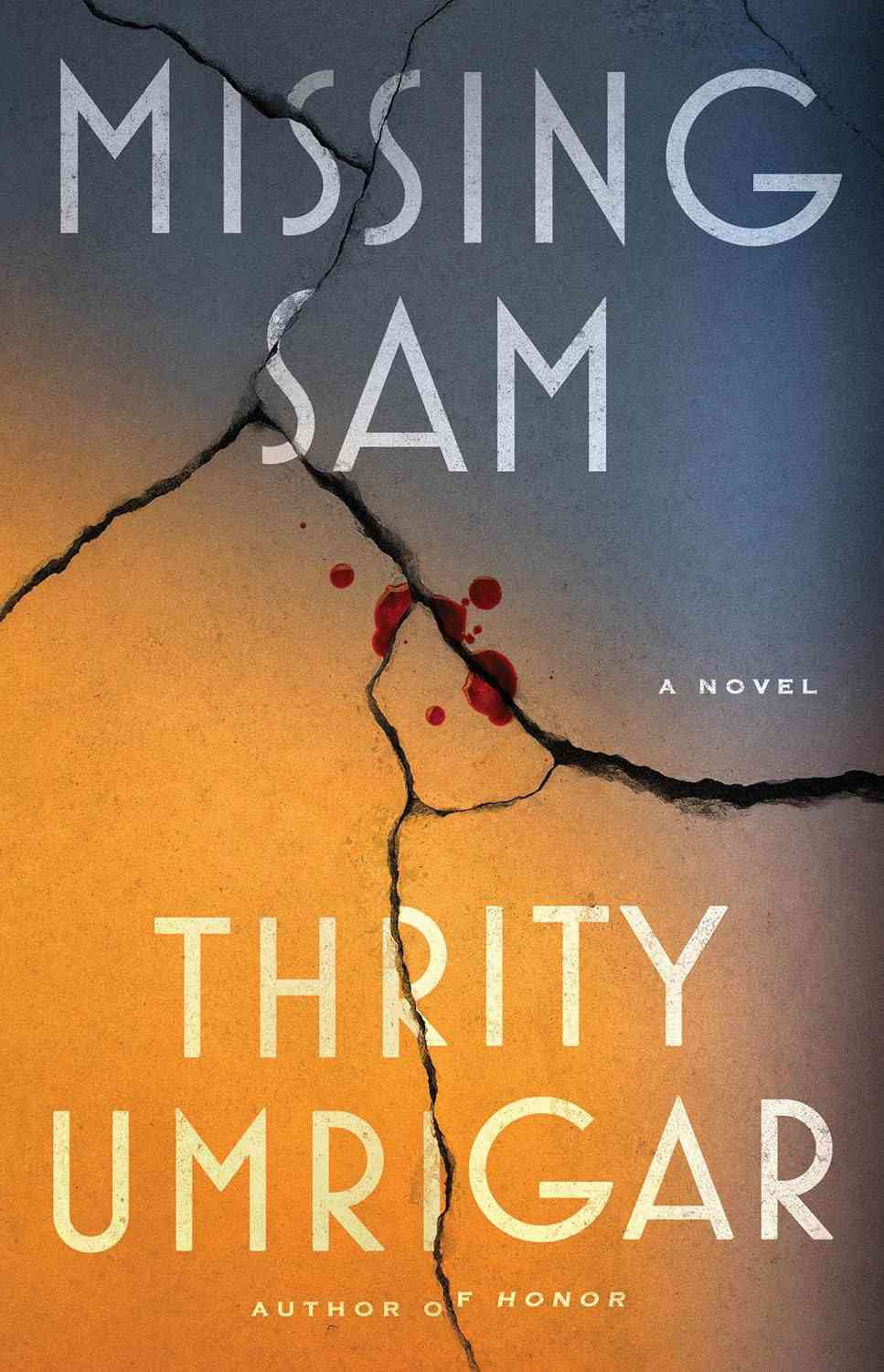
Missing Sam, Thrity Umrigar, Algonquin Books.
